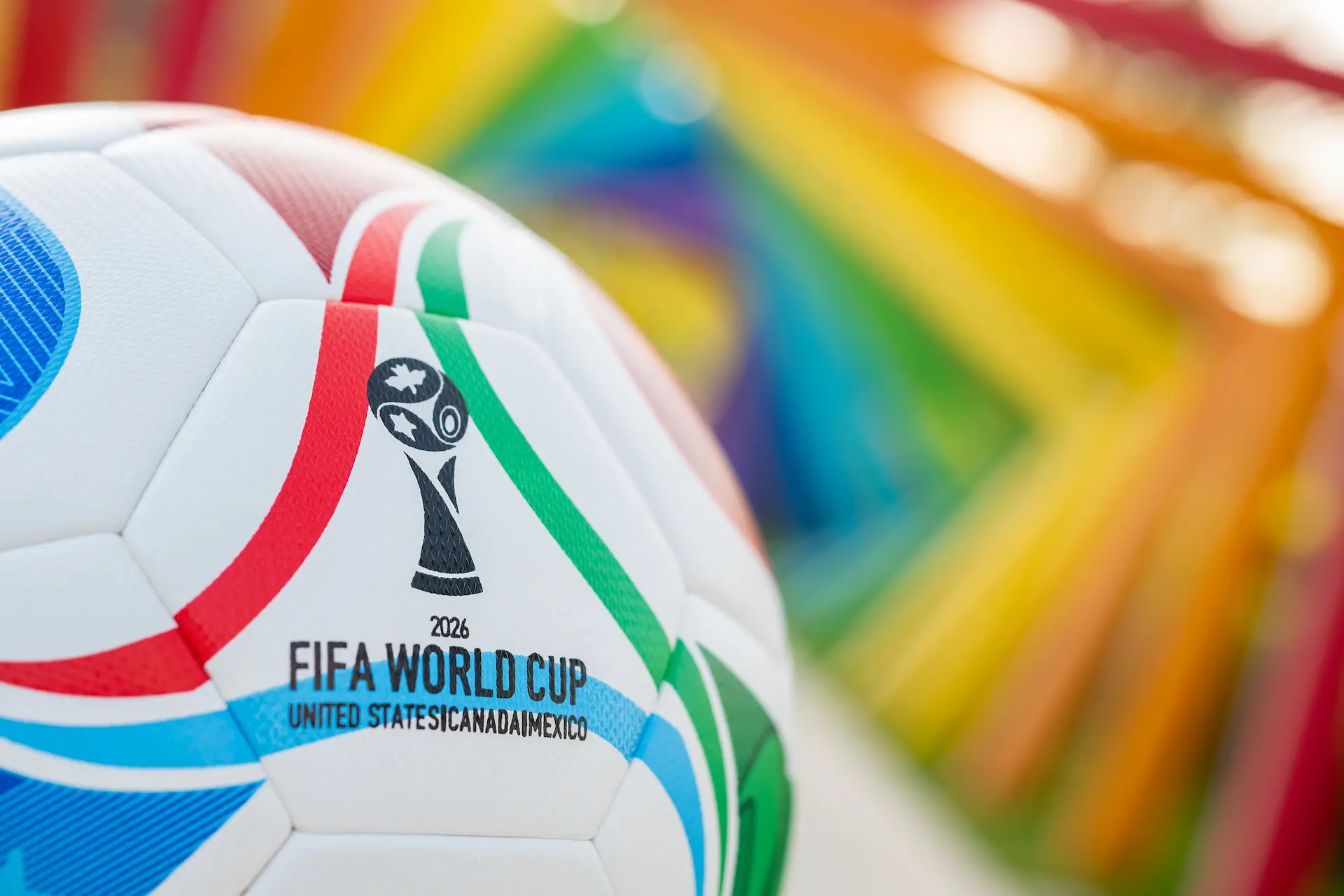

The 2026 FIFA World Cup is underway across the United States, Canada and Mexico. It is the biggest tournament in football history, featuring 48 teams, 104 matches, 16 host cities and a global audience in the billions. For official sponsors, that reach comes at an eye-watering price. Sponsorship spots for the 2026 World Cup are estimated to cost anywhere from £25 million to over £150 million. For everyone else, FIFA took an extremely strict stance, enforcing a blanket ban on non-sponsor brands, which resulted in a mass cover-up.
A few clever brands did exactly as they were told. The problem is, when you cover up an iconic logo, people tend to fill in the blanks. The result has been some of the most talked-about marketing stories of the year.
Why FIFA is covering up brands
Companies that pay hundreds of millions of pounds to become official FIFA partners are granted commercial exclusivity throughout the tournament. To protect that exclusivity, the governing body intervenes across stadiums, public spaces, players’ apparel and accessories, removing any unauthorised brand associations.
In practice, that meant an extraordinary logistical exercise across North America. Stadium names were stripped and replaced with bland city placeholders. AT&T Stadium in Arlington became Dallas Stadium. Gillette Stadium became Boston Stadium. Levi’s Stadium in Santa Clara became the “San Francisco Bay Area Stadium.” And it went much further than signage. The clean-up extended to stickers, packaging, vending machines, hospitality products and any branding that could appear in official tournament imagery. Even everyone’s favourite bottle of tomato sauce wasn’t safe.
For most brands, this would be a PR inconvenience to quietly absorb. For a few, it became the best free advertising they have ever had.
Levi’s: The logo you cannot hide
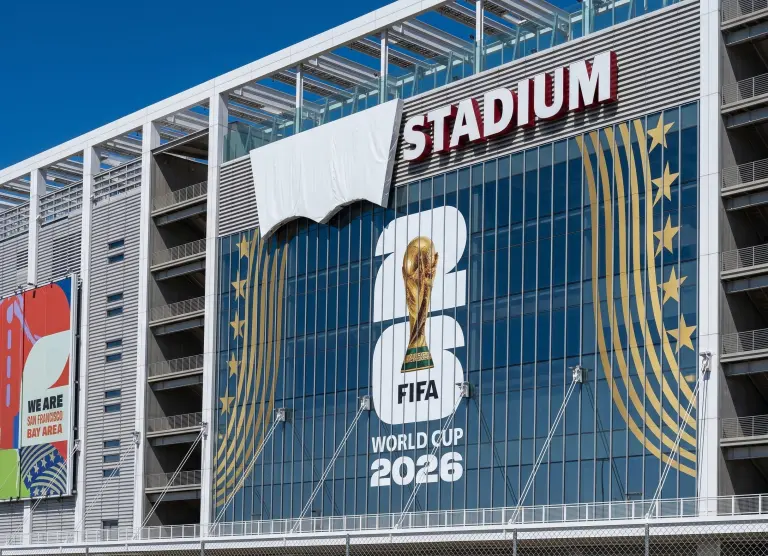
Levi’s responded to FIFA’s requirement by covering its iconic stadium logo with a white tarp while leaving the unmistakable batwing silhouette visible. The wind helped matters along and the shape stayed entirely legible beneath its covering.
Levi’s moved fast. The company changed its Instagram profile picture to feature the covered logo and published a playful video referencing the viral “Nobody’s Gonna Know” trend. The accompanying caption read “Welcoming the world to the beautiful [redacted] stadium!”
They extended the campaign to Levi’s locations around the world, putting the white sheet on storefronts in Paris, London, Brazil, Mexico, Hong Kong and more. The posts racked up nine million views on TikTok alone.
Strong brands are not built solely around logos or names. They are built through recognisable shapes, colours, symbols and visual cues that consumers instantly associate with the brand. When those assets become deeply embedded in culture, recognition can survive even when the logo itself disappears. Levi’s had spent over 150 years building that equity. FIFA simply provided the ultimate test. The social media and online coverage by Levi’s, media outlets, and fans of the campaign made the brand go viral. FIFA’s paid sponsors are probably wishing they got that sort of return on their investment.
Gillette: Covered in character
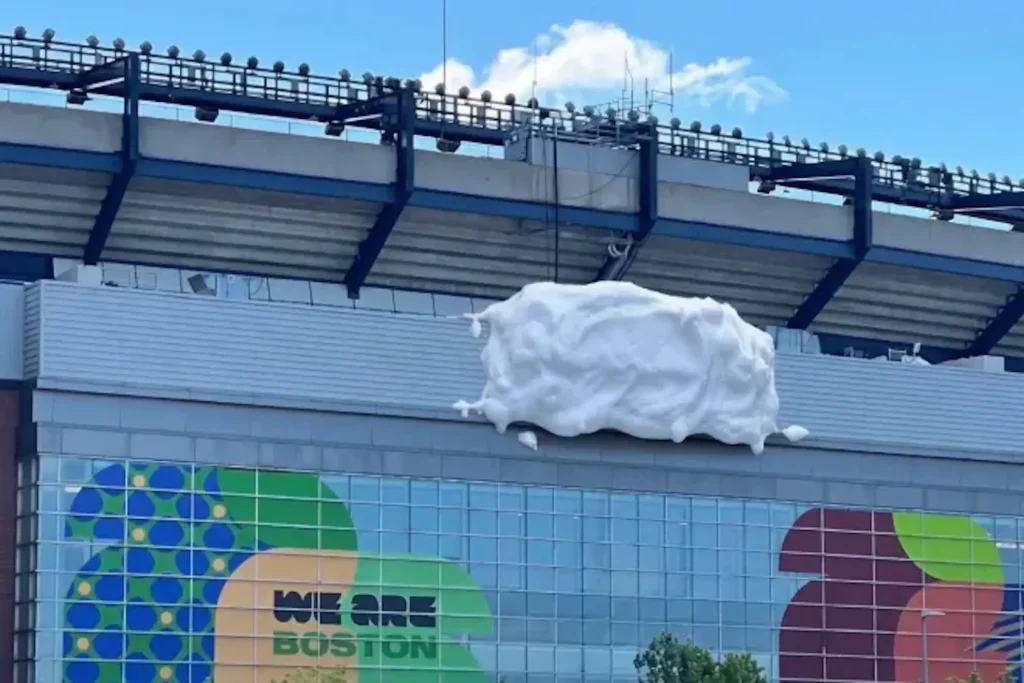
At Gillette Stadium in Foxborough, home of the New England Patriots, references to the Gillette name were covered, including large exterior signage, logos on stadium infrastructure, and even small branding elements attached to seats. Small pieces of tape were placed over the “Gillette Stadium” label on every seat in the building. That’s nearly 65,000 individual strips. Even commentators during games and in pre-match build-up were banned from referring to the stadium as “Gillette Stadium” and had to simply refer to it as Foxborough.
Rather than say nothing, Gillette turned the cover-up into content. They posted a picture of their logo hidden by a big heap of shaving foam with the words “At least we got to choose how we cover it.” While in this case it was an altered image that was shared online, it had the same effect as Levi’s cover-up, going viral as consumers and marketers shared it widely.
The unusual solution met FIFA’s strict regulations and playfully reinforced the brand’s identity. Another big brand benefited from the attempted concealment. At this point, FIFA must be wishing they’d just left the brands be…
It has to be… And it is!
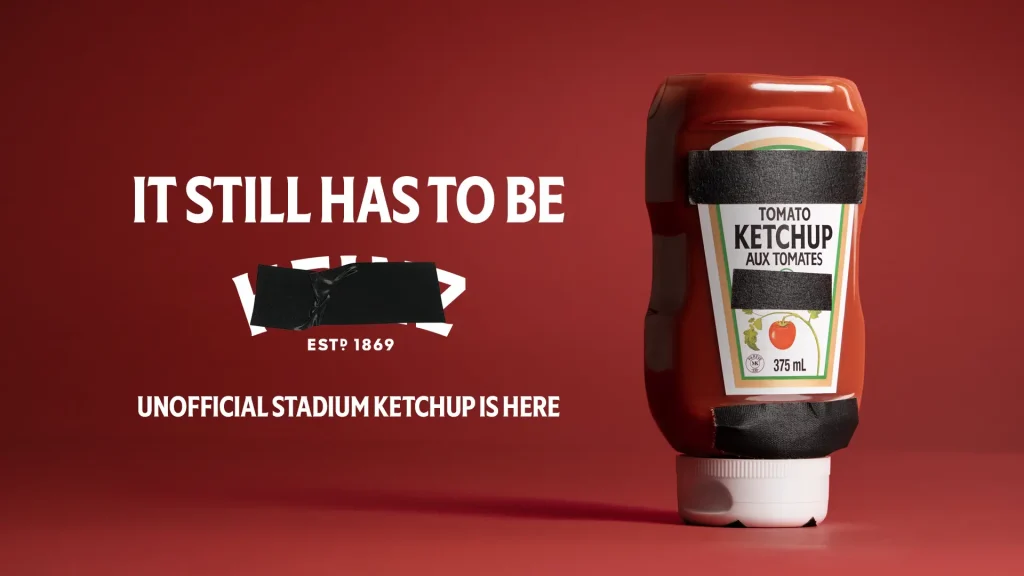
Heinz does not hold naming rights to any World Cup venue. It does not even have a presence in stadiums in any traditional sense. It simply makes the ketchup that people put on their food in the stadium. But FIFA made the decision to still enforce their rules.
Fans quickly noticed that ketchup bottles inside stadiums had been taped over to comply with branding regulations. The problem? You could still tell they were Heinz bottles. The familiar shape, the cap, and even parts of the label were enough to give it away.
Instead of ignoring the attention, Heinz embraced it and launched a limited-edition “Unofficial Stadium Ketchup” in Toronto, turning a restriction into a marketing opportunity. Heinz Canada turned a piece of tape into a product concept, a press release and a social moment, all from a restriction it had no power to resist.
Then Heinz teamed up with Heineken for something more ambitious. The campaign centred on a six-pack containing five bottles of Heineken and one bottle of Heinz Tomato Ketchup, described as “the match we’ve all been waiting for.”
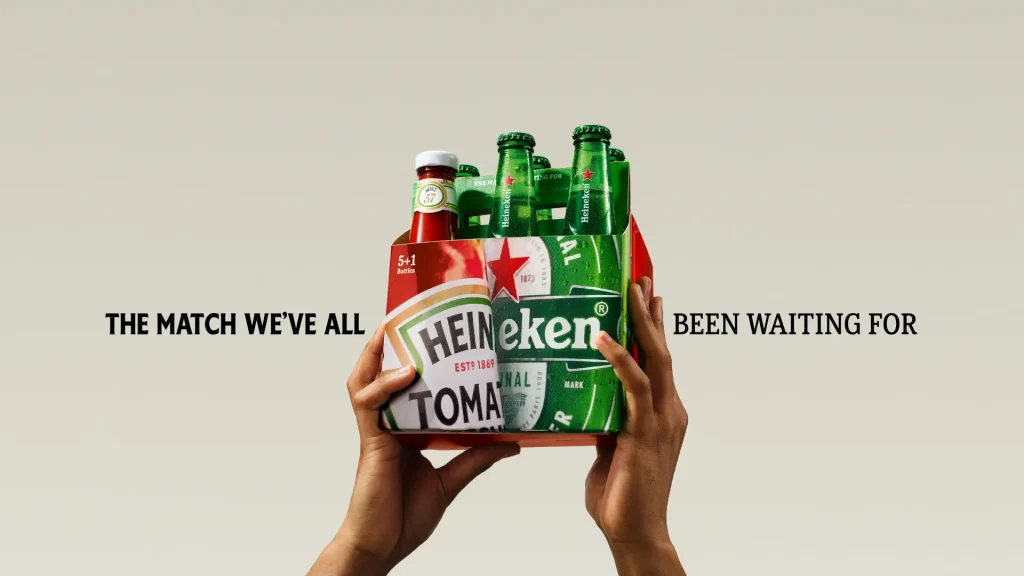
It was a generic football nod that avoided any close replication of FIFA’s protected branding. This is a good example of how advertisers can tap into tournament buzz without straying too close to the legal boundary.
Kraft Heinz North America CMO Todd Kaplan said the collaboration formalised a relationship consumers already know, adding that the best ideas celebrate behaviours that have already been part of consumers’ lives for generations.
Beats by Dre: Turning a tape strip into a tease

FIFA made Germany player Jamal Musiala cover the logo on his Beats by Dre headphones with a strip of tape before Germany’s match against Curaçao. The photo went viral immediately.
Undeterred, Beats immediately swapped its Instagram profile photo with a piece of white tape covering the logo to match the headphones. The brand captioned it “Spoiler alert: it’s a b.” It turned out to be a teaser for an unreleased headphone model nobody knew existed.
What had started as a compliance moment became a product launch. This is not ambush marketing in the traditional sense; it’s brand responsiveness at its sharpest. Reacting in real time and making the restriction part of the story made sure Dre didn’t miss a beat.
Our thoughts
Client Services Director at Harrison Carloss, Rebecca Cox, commented, “It’s quite remarkable how it’s all played out. You’ve got these massive brands being told to cover up their logos to protect FIFA’s official World Cup sponsors who have paid tens if not hundreds of millions, and yet all anyone is talking about right now are the likes of Levi’s, Gillette and Heinz.
“The brands that have paid to sponsor the World Cup will certainly be getting more penetration in the long term and across all sorts of different channels, including access to FIFA’s marketing data, which is estimated to contain hundreds of millions of customer records globally. But you can’t help but wonder if FIFA had just relaxed its rules, they could have avoided creating this online buzz for non-sponsor brands. Without being forced to hide, the reach and noise of these brands would have been significantly subdued and allowed for more focus on FIFA’s paid World Cup sponsors.”
What this tells us about branding
FIFA’s clean-stadium policy exists to protect its commercial model and the investment of its official partners. That is entirely legitimate. Official sponsors are playing a different game; they receive rights, access, activations, hospitality opportunities and official association with one of the world’s biggest sporting events. Those benefits are difficult to replicate.
But what the brands above demonstrated is that a logo is not a brand. A name is not a brand. A brand is the sum of every impression, every association, every piece of equity built over years of consistent, bold and distinctive work. You can tape over Heinz’s label. You cannot tape over 150 years of being the number one brand of tomato sauce. Much like how McDonald’s doesn’t need to show more than a sliver of their golden arch to create instant brand recall and recognition.
The real lesson for any business, large or small, is that when you invest in building a brand properly, considering the shapes, the colours, the voice and the values, you create something that cannot simply be switched off. It becomes culturally embedded and belongs to the people. That’s something that FIFA and other large organisations just can’t control. Sometimes, the best thing a competitor, a regulator or even a governing body can do for you is try to make your brand disappear.